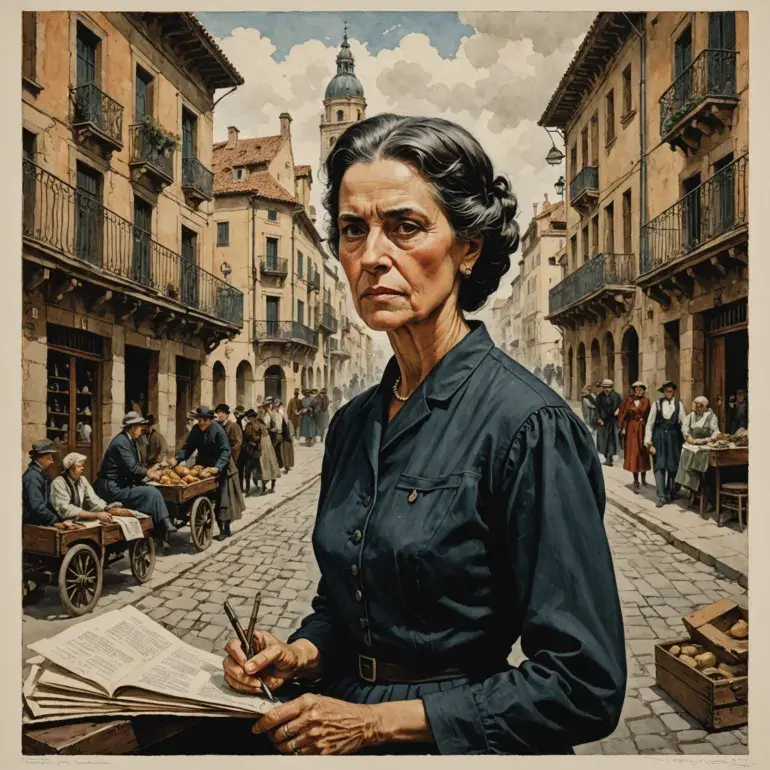
In the annals of feminist history, few figures shine as brightly yet as poignantly as Hildegart Rodriguez. Born into a world brimming with rigid social norms and expectations, Hildegart emerged not only as a prodigious intellect but also as a symbol of daring female empowerment—an emblem of what it means to challenge the status quo. Her life, though tragically cut short, offers a powerful narrative about the intersection of genius, feminism, and the constraints imposed by society and even those closest to her. But what exactly makes Hildegart stand out among feminist icons? And why does her story still resonate with activists, scholars, and everyday readers today?
Unearthing a Brilliant Mind Amidst Restrictive Times
Hildegart Rodriguez was not your average young woman. From an early age, she demonstrated an extraordinary capacity for learning and leadership, rapidly becoming a leading voice in feminist and progressive circles in early 20th-century Spain. Yet, her rise was shadowed by the complex—and often suffocating—expectations imposed by her mother, Aurora Rodriguez, who meticulously shaped Hildegart’s education and public persona with a vision that blurred the lines between admiration and control.
This intense dynamic raises a compelling question: how does personal ambition coexist with external pressures, especially when those pressures come from a figure who is also a caregiver? It’s a tension that resonates beyond Hildegart’s own story, touching on broader themes of autonomy, identity, and the challenges faced by women striving to break free from traditional molds. Interestingly, just as Hildegart navigated these turbulent waters, individuals today encounter their own forms of control and choice in unexpected arenas—even in the digital realm. For instance, enthusiasts of the aviator game owner community often discuss autonomy and strategy, mirroring the delicate balance between control and freedom that Hildegart herself experienced on a much grander scale.
From Iconic Promises to a Heartbreaking End
By her early twenties, Hildegart had already established herself as a beacon of feminist thought, advocating for sexual education, women's rights, and social reform. Her writings and speeches inspired many, positioning her as one of the most promising feminist icons of her era. However, this promising trajectory was violently interrupted, leading to one of the most tragic chapters in feminist history. The very person who had sculpted Hildegart’s path—her mother—ended her life in a shocking act that stunned the nation and left a lasting scar on the feminist movement.
What can we learn from such a profound tragedy? Why does Hildegart’s story continue to captivate and evoke such deep reflection? These questions invite us to delve into the complexities of ambition, freedom, and the human cost of societal expectations. They also challenge us to reconsider the narratives we celebrate and the shadows that often accompany brilliance. In doing so, Hildegart’s life becomes more than just a historical anecdote; it transforms into a mirror reflecting ongoing struggles for women’s autonomy and recognition.
Exploring the Enduring Legacy of Hildegart Rodriguez
- Her role as a pioneer in sexual education and feminist activism, breaking taboos of her time.
- The psychological and social dimensions of her relationship with her mother, highlighting the complexities of maternal influence.
- How her life story informs current discussions on individual freedom versus societal control.
- Why remembering Hildegart is crucial for understanding the multifaceted nature of feminist history.
In this article, we will journey through Hildegart’s remarkable yet heartbreaking life, unpacking how her story intertwines extraordinary intellect with tragedy. Along the way, we will explore what makes her a lasting feminist icon—one whose legacy continues to challenge and inspire. Whether you’re a student of history, a feminist activist, or simply curious about the untold stories behind iconic figures, Hildegart Rodriguez’s tale is one that demands attention and reflection.

Hildegart’s Tragic Tale: Exploring the Life of a Feminist Icon
Who Was Hildegart Rodriguez?
Hildegart Rodriguez was a prodigious Spanish intellectual and feminist icon whose life story combines remarkable brilliance with heartbreaking tragedy. Born in 1914, Hildegart was raised by her mother, Aurora Rodriguez, who had a vision of creating the perfect woman devoted to social reform and feminist ideals. From an early age, Hildegart exhibited extraordinary intelligence and was deeply involved in progressive politics, particularly advocating for women's rights and sexual education during the politically volatile period of early 20th-century Spain.
Her story stands out because she was not only a symbol of feminist progress but also a victim of her mother’s controlling and obsessive ambitions, which ultimately led to her untimely death at the age of 18. This juxtaposition of genius and tragedy makes Hildegart Rodriguez a compelling and poignant figure within feminist history.
Why Is Hildegart Considered a Feminist Icon?
Hildegart Rodriguez is regarded as a feminist icon for several reasons that highlight her contributions and the context in which she lived:
- Early Advocacy: Despite her young age, Hildegart was a vocal advocate for women's sexual freedom and education, topics that were taboo in much of Europe at the time.
- Political Engagement: She was actively involved in leftist and feminist movements during the Second Spanish Republic, promoting progressive reforms that aimed to advance gender equality and social justice.
- Intellectual Contributions: Hildegart authored essays and gave lectures on feminism, birth control, and social reform, contributing to the intellectual foundation of feminist thought in Spain.
- Symbol of Resistance: Her tragic death at the hands of her mother, who sought to control her destiny, transformed Hildegart into a symbol of the struggle for female autonomy against patriarchal and familial oppression.
Her life story continues to inspire feminist scholars and activists who study the intersection of gender, politics, and personal freedom.
What Were the Key Events That Shaped Hildegart’s Life and Legacy?
Understanding the major milestones of Hildegart’s life helps contextualize her significance as a feminist icon:
- Birth and Upbringing: Aurora Rodriguez, her mother, planned Hildegart’s conception as part of a eugenic experiment to create an ideal child devoted to social change.
- Intellectual Development: Hildegart was homeschooled in multiple disciplines, rapidly mastering languages, law, and social sciences.
- Political Activism: As a teenager, she joined feminist and socialist organizations, advocating for reforms like legalized birth control and women's suffrage.
- Tragic Death: In 1933, her mother shot Hildegart dead, claiming she wanted to prevent her from leading a life that diverged from her plans.
This tragic culmination underscores the complexities of Hildegart’s identity—as both a brilliant feminist and a victim of oppressive control.
How Does Hildegart’s Story Reflect Broader Themes in Feminist History?
Hildegart’s life encapsulates several critical themes relevant to feminist discourse:
- The Role of Autonomy: Her struggle highlights the essential feminist principle that women must have control over their own lives and bodies.
- Intersection of Family and Patriarchy: The familial control exerted by her mother—an unusual dynamic—mirrors societal constraints on women enforced by patriarchal structures.
- Feminism and Social Reform: Hildegart’s advocacy for sexual education and birth control prefigures many later feminist campaigns globally.
- The Cost of Genius: Her story warns of the dangers when societal or familial expectations try to mold individuals, particularly women, into predetermined roles.
By analyzing Hildegart’s life, scholars gain insight into the challenges feminist icons face balancing societal expectations with personal freedom.
What Lessons Can Modern Feminists Learn from Hildegart Rodriguez?
Modern feminist activists and scholars draw valuable lessons from Hildegart’s story:
- The Importance of Personal Freedom: Ensuring that women can pursue their own paths without coercion remains a core feminist goal.
- Advocacy for Education and Sexual Rights: Hildegart’s early work underscores the power of education and open dialogue about sexuality in empowering women.
- Recognition of Complex Feminist Legacies: Feminist icons are not without flaws or tragic circumstances; their stories often involve difficult personal struggles that deepen their contributions.
- The Danger of Control in Feminist Movements: Hildegart’s life cautions against any form of ideological or personal control that limits individual expression within feminist activism.
Her legacy encourages a nuanced understanding of feminism, one that embraces complexity and prioritizes genuine empowerment.
Where Can I Learn More About Hildegart and Her Impact?
For those interested in exploring Hildegart Rodriguez’s life and her place among feminist icons, consider the following resources:
- Books: Biographies and historical analyses focusing on Spanish feminism and early 20th-century social movements often include detailed accounts of Hildegart’s life.
- Documentaries and Films: Several Spanish-language documentaries have been produced that explore her story through archival footage and expert interviews.
- Academic Journals: Feminist studies and history journals provide scholarly articles that analyze her contributions and the socio-political context of her activism.
- Museums and Archives: Institutions dedicated to women’s history in Spain may hold personal papers, letters, and other artifacts related to Hildegart.
Investigating these sources will enrich your understanding of Hildegart’s unique role in feminist history and her enduring legacy.